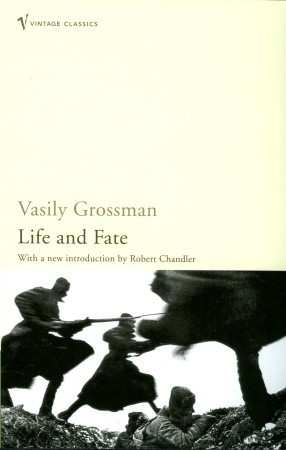

Vasily Grossman (1905–1964) was a Soviet writer, journalist, and war correspondent best known for his novel "Life and Fate," which is often compared to Leo Tolstoy’s "War and Peace." Grossman’s work has been celebrated for its profound insights into the human condition, the moral complexities of war, and the impact of totalitarianism.
Born in Ukraine to a Jewish family, Grossman worked as an engineer and became a literary figure during the Soviet era. His experiences during World War II, particularly as a war correspondent for the Red Army, deeply influenced his writing. He reported on significant events, including the Battle of Stalingrad and the Holocaust, providing a poignant and often harrowing perspective on the war.
"Life and Fate," written between 1950 and 1960, was a sweeping epic that encompassed the lives of various characters during World War II and examined themes of freedom, oppression, love, and resilience. However, the manuscript was confiscated by Soviet authorities, and it was not published until 1980, long after Grossman’s death.
Grossman's other notable works include "For a Just Cause" and "The People Immortal," which reflect his deep humanist beliefs and critiques of Stalinism. His writing is often characterized by its moral depth and empathy for the plight of individuals caught in the machinery of history.
Overall, Grossman's legacy lies in his ability to depict the human experience in times of great crisis, and his works continue to resonate with readers today.
Suppressed by the KGB, Life and Fate is a rich and vivid account of what the Second World War meant to the Soviet Union....