
Josef Albers (1888-1976) was a German-born American artist, educator, and theorist known for his significant contributions to modern art and design, particularly in the fields of painting and color theory. He was a key figure in the Bauhaus movement in Germany before emigrating to the United States in 1933, where he later became a professor at Yale University.
One of Albers' most notable works is his series "Homage to the Square," which consists of hundreds of paintings that explore the interaction of color and form. In this series, he used nested squares of various colors to investigate how colors affect each other and create different visual experiences. Albers' approach focused on the perception of color and its context, laying the groundwork for color theory in art and design.
In addition to his artistic practice, Albers was an influential educator. He emphasized hands-on learning and experimentation, encouraging students to understand the principles of design through direct experience. His pedagogical philosophy has had a lasting impact on art education.
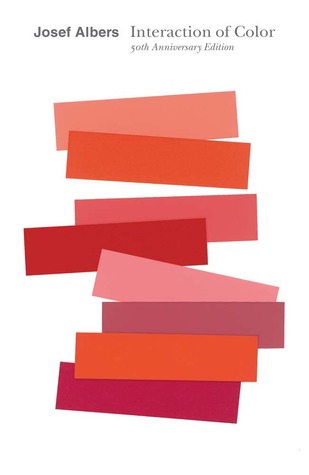
Albers also published several important texts, including "Interaction of Color" (1963), which remains a seminal work in the study of color theory and is widely used in art and design programs. His legacy is characterized by his innovative approach to composition, color, and the educational methodologies he developed.
The 50th anniversary edition of a classic text, featuring an expanded selection of color studiesJosef Albers’s Interacti...