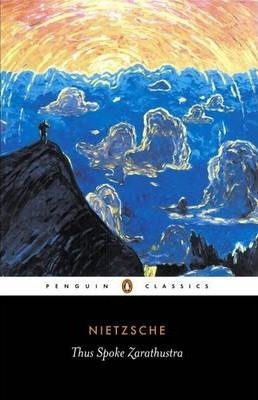
Friedrich Nietzsche (1844–1900) was a German philosopher, cultural critic, and poet known for his profound and often controversial ideas on morality, religion, culture, and the nature of existence. His work has had a significant impact on modern philosophy, theology, literature, and psychology.
Here are some key concepts and contributions associated with Nietzsche:
-
Will to Power: Nietzsche proposed the idea that the fundamental driving force in humans is not survival or reproduction, but a fundamental "will to power"—a striving to reach higher levels of being and to assert one's influence.
-
Eternal Recurrence: This thought experiment suggests that one should live as if they would have to repeat their life in exactly the same way for eternity. It raises questions about how one values their choices and experiences.
-
God is Dead: One of Nietzsche's most famous statements, it reflects his belief that the traditional foundations of morality and meaning were eroding in the wake of the Enlightenment and modern science. This proclamation has been interpreted in various ways, often relating to the decline of religious and metaphysical beliefs.
-
Übermensch (Overman or Superman): This concept describes an individual who overcomes conventional morality to create their own values and purpose. The Übermensch represents Nietzsche's ideal of human potential.
-
Master-Slave Morality: Nietzsche distinguished between two types of morality: "master morality," which values strength, power, and nobility, and "slave morality," which arises from the resentment of the oppressed and values humility, meekness, and sympathy. He argued that contemporary values were largely shaped by slave morality.
-
Critique of Religion: Nietzsche was a vocal critic of organized religion, particularly Christianity, which he believed suppressed individual creativity and strength. He argued that traditional religious values were life-denying rather than life-affirming.
-
Perspectivism: Nietzsche's epistemology asserts that knowledge is always from a particular perspective and that there are no absolute truths, emphasizing the subjective nature of interpretation.
Nietzsche's writing is often characterized by its poetic style, use of aphorisms, and challenging ideas, making him both a complex thinker and a major figure in existential philosophy. His works, including "Thus Spoke Zarathustra," "Beyond Good and Evil," and "The Birth of Tragedy," continue to be studied and debated across various disciplines. Despite (or perhaps because of) his contentious ideas, Nietzsche remains a pivotal figure in understanding the evolution of modern thought.